

Antelope Canyon, a slot canyon carved into the Navajo sandstone by millennia of fluvial erosion, holds a magnetic allure. It’s not merely its geological formation that captivates; the canyon resonates with a deeper, almost primal connection, perhaps stemming from the profound interplay of light, shadow, and the raw, unyielding power of nature etched into its very walls.
Navigating this natural cathedral requires understanding its geography. A map is more than just a guide; it’s a key to unlocking the secrets of this sandstone labyrinth. Let’s embark on a comprehensive cartographic expedition through Antelope Canyon, dissecting its various facets and unraveling the enigma it presents.
I. Dissecting Antelope Canyon: Upper vs. Lower
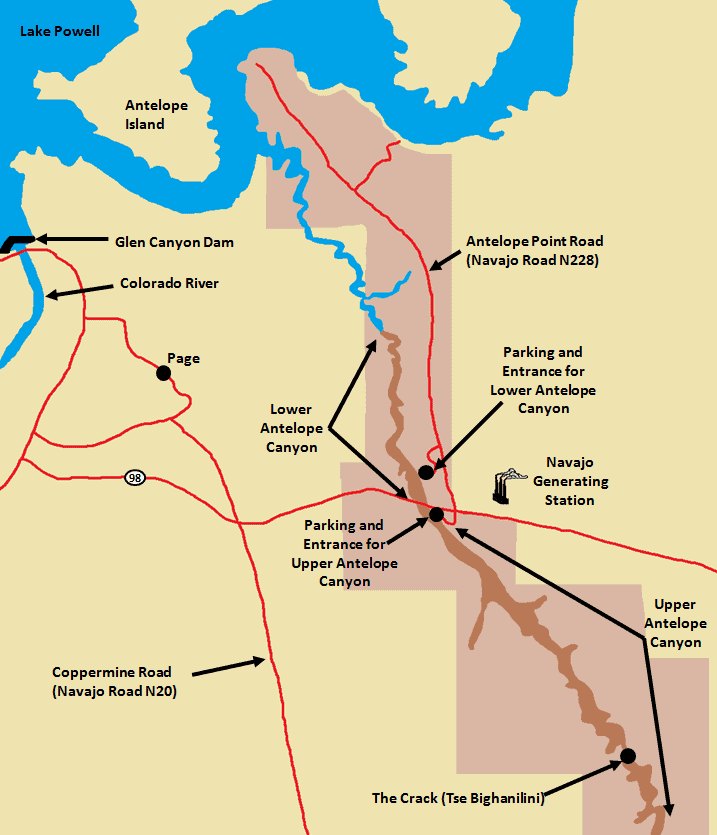
The most fundamental cartographic distinction lies between Upper and Lower Antelope Canyon. While both share the signature sinuous corridors and ethereal light beams, their topographies present markedly different navigational challenges. The Upper Canyon, locally known as Tsé bighánílíní (translated to “the place where water runs through rocks”), boasts a relatively level floor, making it more accessible to a wider range of visitors. This ease of access contributes to its popularity, often resulting in higher foot traffic, particularly during peak season.
Conversely, the Lower Canyon, or Hazdistazí (meaning “spiral rock arches”), demands a more adventurous spirit. Descending into the earth via a series of staircases and ladders, the Lower Canyon’s terrain is characterized by uneven ground and narrow passageways. This physical challenge, while potentially daunting for some, offers a more intimate and immersive experience, allowing for a deeper connection with the canyon’s geology and the ethereal beauty it holds.
II. Pinpointing the Precise Coordinates: Location and Accessibility
Antelope Canyon resides within the Navajo Nation, near Page, Arizona. The geographic coordinates place it squarely in the heart of the American Southwest’s breathtaking landscape. This precise location is not merely a matter of longitude and latitude; it situates Antelope Canyon within a region steeped in Native American history and culture, adding another layer of profound significance to the experience. Access to both Upper and Lower Antelope Canyon is strictly regulated and requires booking a guided tour with authorized Navajo tour operators. This regulation is crucial for preserving the delicate ecosystem and ensuring the safety of visitors, recognizing the canyons as not just geological formations but as sacred sites of profound cultural import.
III. Unveiling the Temporal Dimension: Seasonal Variations and Optimal Visit Times
A map, in its most advanced form, can also represent the temporal dimension. Antelope Canyon’s appearance transforms dramatically with the changing seasons. The famed light beams, piercing through the canyon’s narrow openings, are most pronounced during the late spring and summer months, particularly between the hours of 11:00 AM and 1:00 PM. During these optimal windows, the sun’s zenith angle aligns perfectly to illuminate the canyon’s depths, creating an otherworldly spectacle of light and shadow. Conversely, winter months offer a more subdued experience, with softer, diffused light and fewer crowds. Understanding these seasonal variations is crucial for planning a visit that aligns with individual preferences and photographic aspirations.
IV. Mapping the Ephemeral: Photographic Perspectives and Compositional Considerations
For the avid photographer, a mental map of potential compositions is invaluable. Certain sections of the canyon are renowned for their unique geological features, offering opportunities for capturing stunning imagery. The “Lady in Red” formation in Upper Antelope Canyon, for example, is a perennial favorite, its undulating curves and vibrant hues providing a captivating subject. Similarly, the “Totem Pole” formation in Lower Antelope Canyon presents a dramatic vertical element, contrasting starkly with the canyon’s horizontal flow. Pre-planning photographic perspectives allows for a more efficient and purposeful exploration, maximizing the chances of capturing those elusive, once-in-a-lifetime shots. This requires a mindful approach, respecting the environment and fellow travelers while seeking out those unique angles that reveal the canyon’s artistic soul.
V. Delving Deeper: Beyond the Tourist Trail and the Call of Preservation
While tourist maps focus primarily on the accessible sections of Upper and Lower Antelope Canyon, the geological reality extends far beyond. Numerous other slot canyons, some still largely unexplored, carve their way through the surrounding sandstone landscape. These less-traveled paths offer a glimpse into the raw, untamed beauty of the region, but access is often restricted to experienced canyoneers with specialized knowledge and equipment. Recognizing the fragility of this ecosystem is paramount. Every step, every touch, can have a lasting impact on the delicate sandstone formations. Sustainable tourism practices, such as staying on marked trails, avoiding unnecessary contact with the canyon walls, and respecting the cultural significance of the site, are crucial for preserving Antelope Canyon for future generations.
VI. The Unseen Map: Navajo Culture and Spiritual Significance
Perhaps the most profound map is the one etched in the hearts and minds of the Navajo people. For generations, Antelope Canyon has held deep spiritual significance, serving as a place for meditation, reflection, and connection with the natural world. Understanding this cultural context adds a dimension of reverence to the experience, reminding us that we are not merely observers but guests in a sacred space. Respecting Navajo traditions and customs is an integral part of visiting Antelope Canyon responsibly, honoring the rich heritage of the land and its people.
In conclusion, navigating Antelope Canyon requires more than just a rudimentary understanding of its geography. It demands an appreciation for its geological complexity, its cultural significance, and its ephemeral beauty. A map, whether physical or mental, serves as a guide, allowing us to delve deeper into the heart of this sandstone labyrinth and experience its profound allure on a truly transformative level. It’s an invitation to not just see, but to truly understand the magic woven into the very fabric of Antelope Canyon.
Gallery of Map Of Antelope Canyon
Antelope Canyon Arizona Map The Ultimate Travel Guide To Antelope
fity.club
Antelope Canyon Arizona Photo Tips | TouristSecrets | TouristSecrets
www.touristsecrets.com
Antelope Canyon Arizona Navajo – Map Antelope Canyon Sm Arizona Map
letstalksport.co.uk
Map Of Antelope Canyon

ansvers.com
Antelope Canyon Arizona Navajo – Map Antelope Canyon Sm Arizona Map
letstalksport.co.uk
Antelope Canyon Arizona Map The Ultimate Travel Guide To Antelope
fity.club
Map Of Antelope Canyon
ansvers.com
Ultimate Antelope Canyon | Guide
keepnaturewild.com
Map Of Antelope Canyon Az
ansvers.com
Antelope Canyon Arizona Map The Ultimate Travel Guide To Antelope
fity.club
Antelope Canyon Arizona Map The Ultimate Travel Guide To Antelope


Leave a Comment